If a power grid failure, supply chain disruption, or natural disaster hit your area tomorrow, how many weeks could your family eat from what's already in your home? For most Americans, the honest answer is 3–7 days. A home freeze dryer changes that equation entirely — letting you build a genuine 6-month to multi-year food supply from your own kitchen, at a fraction of the cost of commercial freeze dried brands.
This guide is the one we wish existed when we started. We'll cover which foods to prioritize, how to store them correctly, the difference between mylar bags and mason jars, and the exact strategy we used to build a 6-month family food supply in under 14 months.
Best shelf life method: Mylar bags + oxygen absorbers + food-grade buckets = 20–25 years
Best foods to prioritize: Chicken, rice, beans, eggs, vegetables, fruits
Worst foods for long storage: High-fat items (butter, fatty meats) — max 2–5 years
Storage conditions: Cool (55–70°F), dark, low humidity
1-year supply goal: Approximately 1,000–1,200 lbs of fresh food per person
Who This Guide Is For
This guide is designed for:
- Preppers and survivalists building 3-month to 5-year food supplies
- Homesteaders preserving garden and farm harvests without waste
- Families who want food security without ongoing commercial purchase costs
- Anyone who experienced a COVID-style supply chain shock and wants to be ready
Why Freeze Drying Is the Gold Standard for Long-Term Storage
| Method | Shelf Life | Nutrient Retention | Cost | Verdict |
|---|---|---|---|---|
| Freeze Drying (home) | 20–25 years | Up to 97% | Medium | ⭐ Best Overall |
| Commercial freeze dried | 20–25 years | Up to 97% | Very High | Expensive |
| Dehydrating (home) | 1–5 years | 60–80% | Low | Limited shelf life |
| Canning (home) | 1–5 years | 40–60% | Low | Good for some foods |
| Vacuum sealing (fresh) | 1–3 years (frozen) | High | Low | Needs freezer power |
What to Freeze Dry First: Priority Food List
Strategic sequencing matters. Build your supply in layers — protein first (hardest to store otherwise), then carbs, then fruits/vegetables:
Proteins (Month 1–3)
Cooked chicken breast, ground beef, eggs (scrambled and freeze dried), shrimp. These are calorie-dense, nearly impossible to store long-term any other way, and expensive to buy pre-packaged. Cooked chicken freezes dry in 28–36 hours and lasts 15–25 years sealed in mylar.
Carbohydrates & Staples (Month 2–4)
Cooked white rice, beans, pasta, mashed potatoes. These are your calorie backbone. Freeze dried cooked rice reconstitutes in 5 minutes with warm water and is virtually indistinguishable from freshly cooked.
Vegetables (Month 3–6)
Corn, peas, green beans, broccoli, spinach. Garden surplus is ideal here — freeze during peak season when prices are lowest. Vegetables retain color, flavor, and nutrition remarkably well.
Fruits & Snacks (Ongoing)
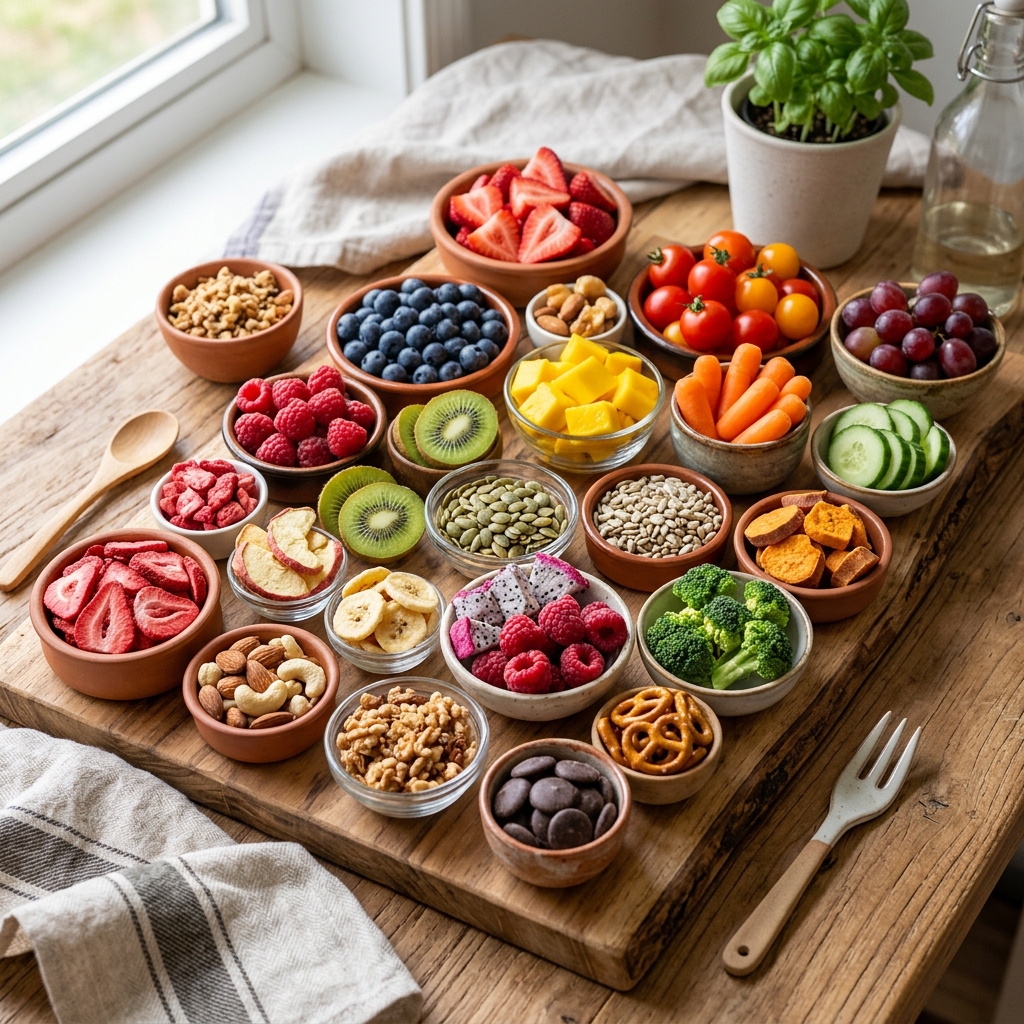
Strawberries, bananas, blueberries, apple slices. These become morale-boosting snacks in an emergency and nutritional variety in everyday use. See our full fruit guide for rankings.
Storage Container Comparison
| Container | Shelf Life | Best Use | Cost |
|---|---|---|---|
| Mylar bag + O2 absorber + bucket | 20–25 years | Long-term vault storage | $0.50–$1.50/bag |
| Mason jar (vacuum sealed) | 1–3 years | Everyday rotation pantry | $1–$2/jar |
| Mylar bag alone (no bucket) | 10–15 years | Medium-term storage | $0.40–$1.00/bag |
| Ziploc/standard bag | Days to weeks | Short-term only | Very low |
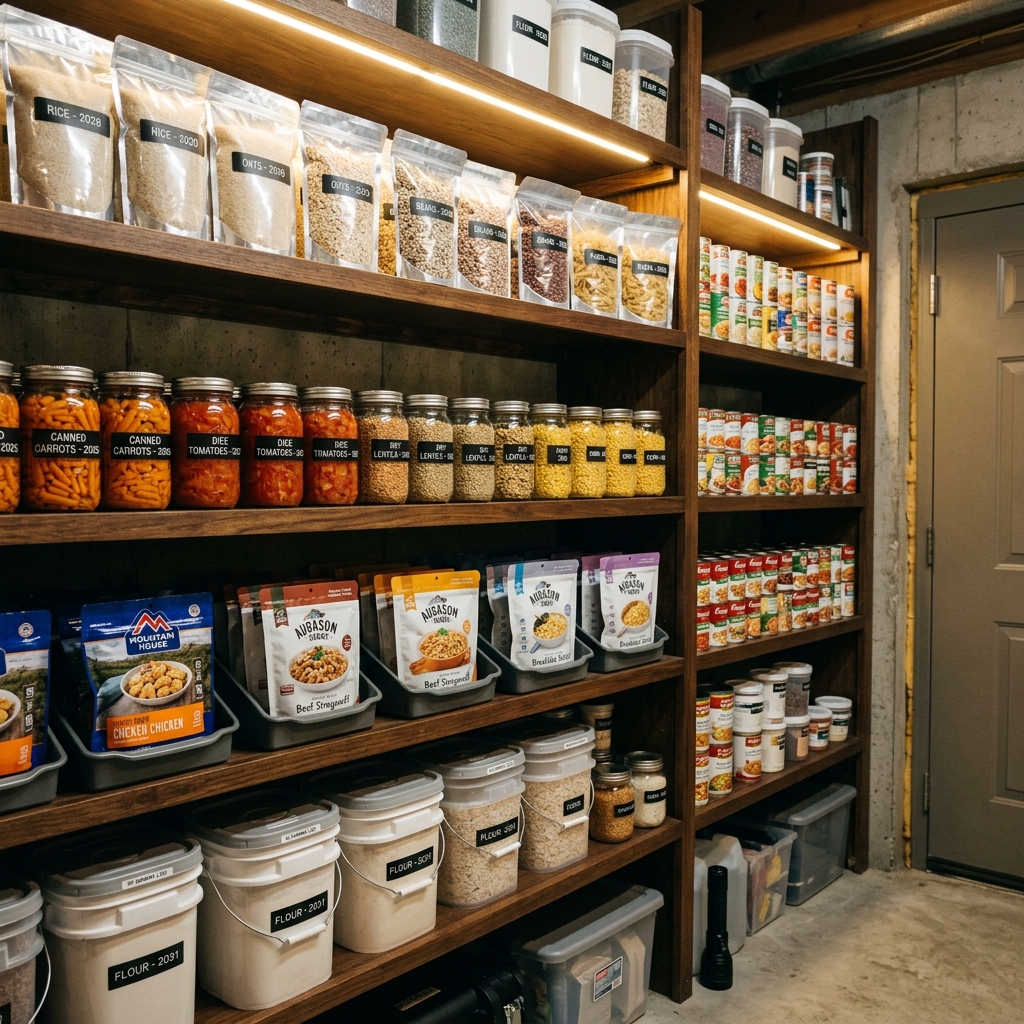
Our recommendation: Use mason jars for your 1–6 month rotation supply (easy to grab and use), and mylar bags inside 5-gallon food-grade buckets for your deep vault (1–25 year storage). Label everything with the date, food type, and batch number.
Pros & Cons of Home Freeze Drying for Long-Term Storage
| ✅ Pros | ❌ Cons |
|---|---|
| 25-year shelf life — best of any home method | $2,000–$5,000 machine investment required |
| Full nutrition retention (up to 97%) | Long cycle times — 24–40 hrs per batch |
| No electricity needed to store (unlike frozen) | Must be rehydrated before eating most items |
| Store meat, dairy, eggs — impossible with most methods | High-fat foods have shorter shelf life (2–5 yrs) |
| True food independence from supply chains | Requires proper container and oxygen absorber use |
How We Built a 6-Month Supply in 14 Months
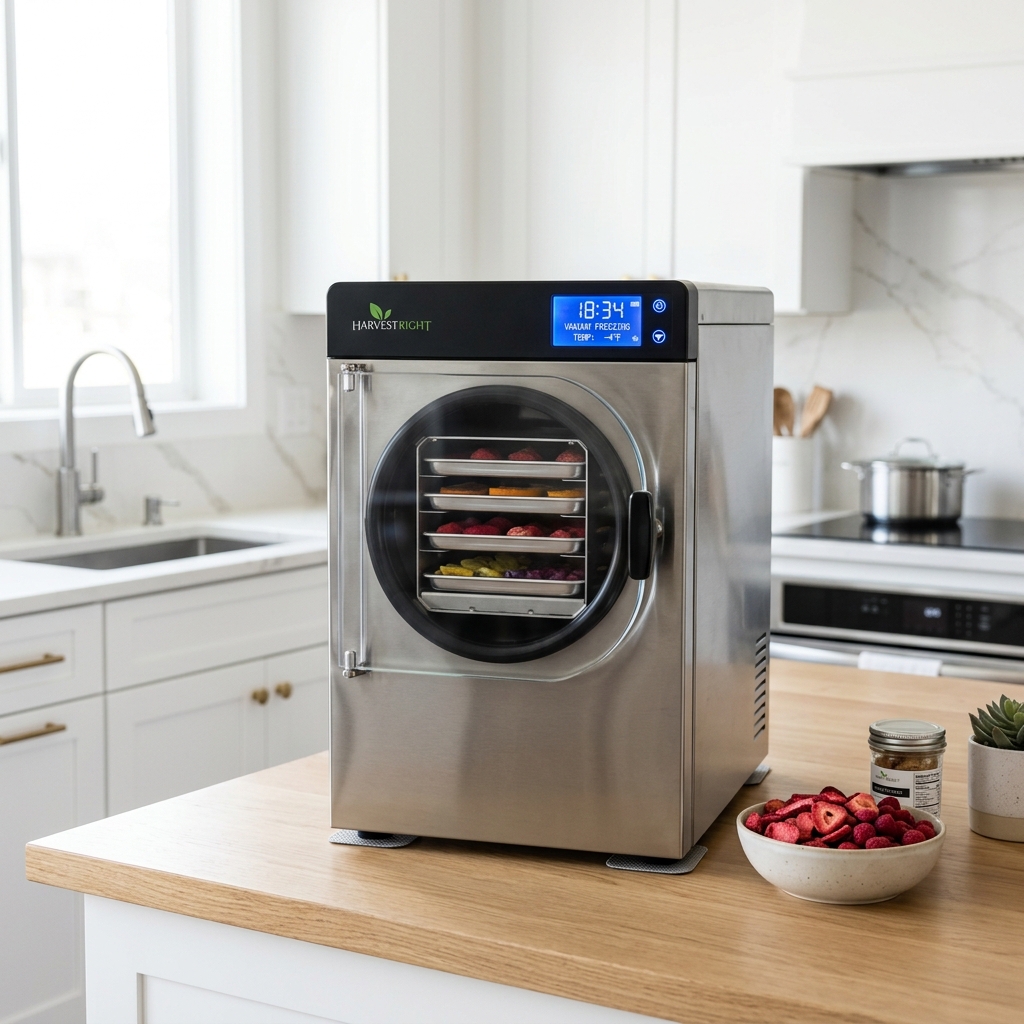
We started in early 2025 with one goal: a genuine 6-month food supply for a family of four. Running our Harvest Right Medium at 2–3 batches per week, here's what the timeline actually looked like:
- Months 1–3: Focused entirely on protein. 68 batches of chicken, ground beef, and eggs. Cost: ~$340 in electricity + supplies.
- Months 4–8: Added vegetables and carbs — cooked rice, corn, green beans, broccoli. Built out to a 4-month supply.
- Months 9–14: Fruits, dairy (cheese, yogurt), and specialty items. Completed the 6-month goal with 3 weeks to spare.
Total electricity cost over 14 months: approximately $280. Total consumables (bags, oil, absorbers): ~$420. Equivalent commercial freeze dried food cost: $4,800–$7,200 for the same volume. The machine paid for itself in one year.
Critical Storage Mistakes to Avoid
1. Storing in warm locations — Every 10°F above 70°F cuts shelf life roughly in half. Garages and attics are enemies of long-term storage.
2. Wrong oxygen absorber size — A 300cc absorber is standard for a 1-gallon mylar bag. Too small = residual oxygen. Too large = wasted money but no harm.
3. Not testing moisture before sealing — Press a piece of food between your fingers. If it bends or feels pliable, it's not fully dry. Re-run or run extra hours before sealing.
4. Forgetting to label dates — After 2 years of batches, unlabeled bags become a mystery. Label every single bag before sealing.
5. Skipping the rotation plan — Long-term storage only works if you actually eat and replace your stock. Practice "first in, first out" with your mason jar rotation.
Frequently Asked Questions
Your first step is understanding the machine. Check our full review of the most popular home freeze dryer: Harvest Right 18-Month Review → | Or see the Full Cost Breakdown →
Summary
- ✔ Freeze drying gives 20–25 year shelf life — no other home method comes close
- ✔ Priority order: Proteins → Carbs → Vegetables → Fruits
- ✔ Best storage: Mylar bags + O2 absorbers + food-grade buckets, stored below 70°F
- ✔ A 6-month supply for a family of 4 is achievable in 12–18 months of regular batching
- ✔ Label everything with date, food type, and batch number
- ✔ Rotate stock — mason jars for 1–6 months, mylar vault for 1–25 years
Related: Best & Worst Foods to Freeze Dry | Freeze Drying vs Dehydrating Comparison