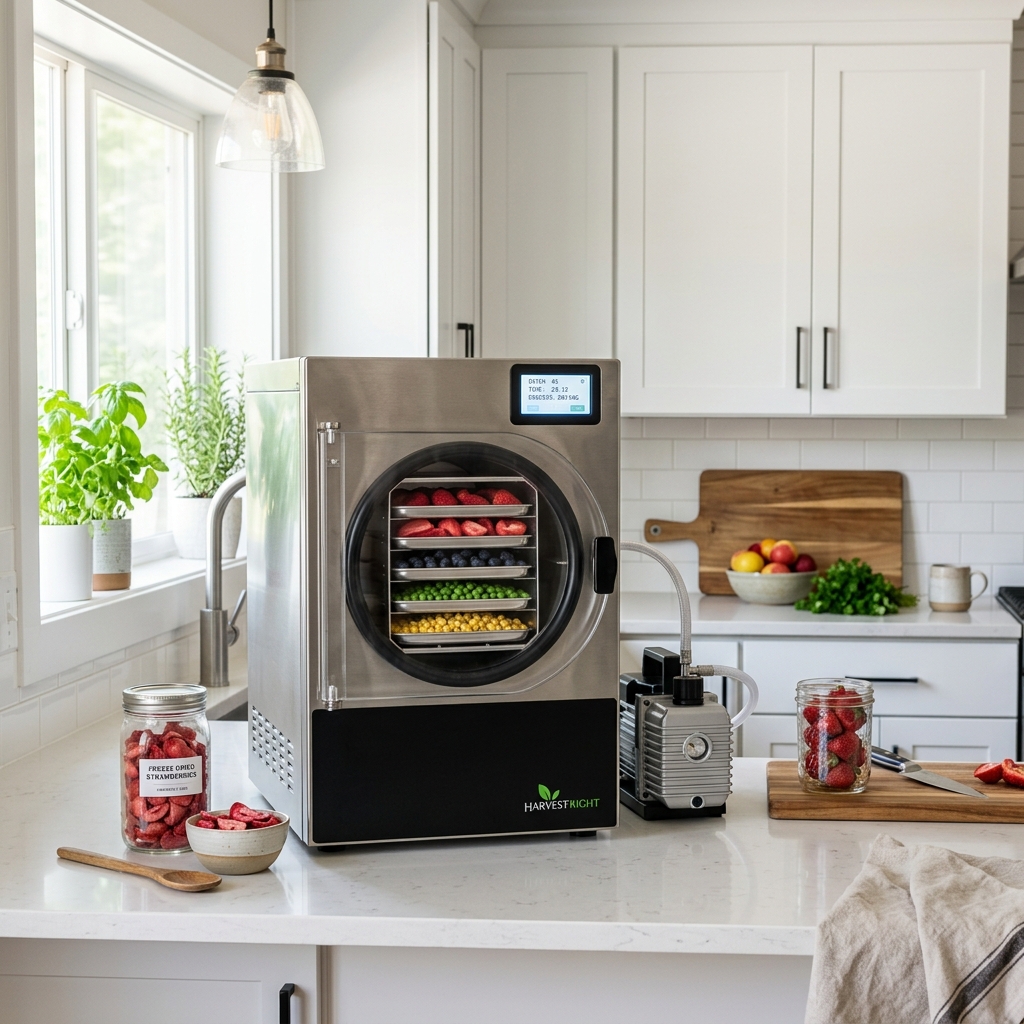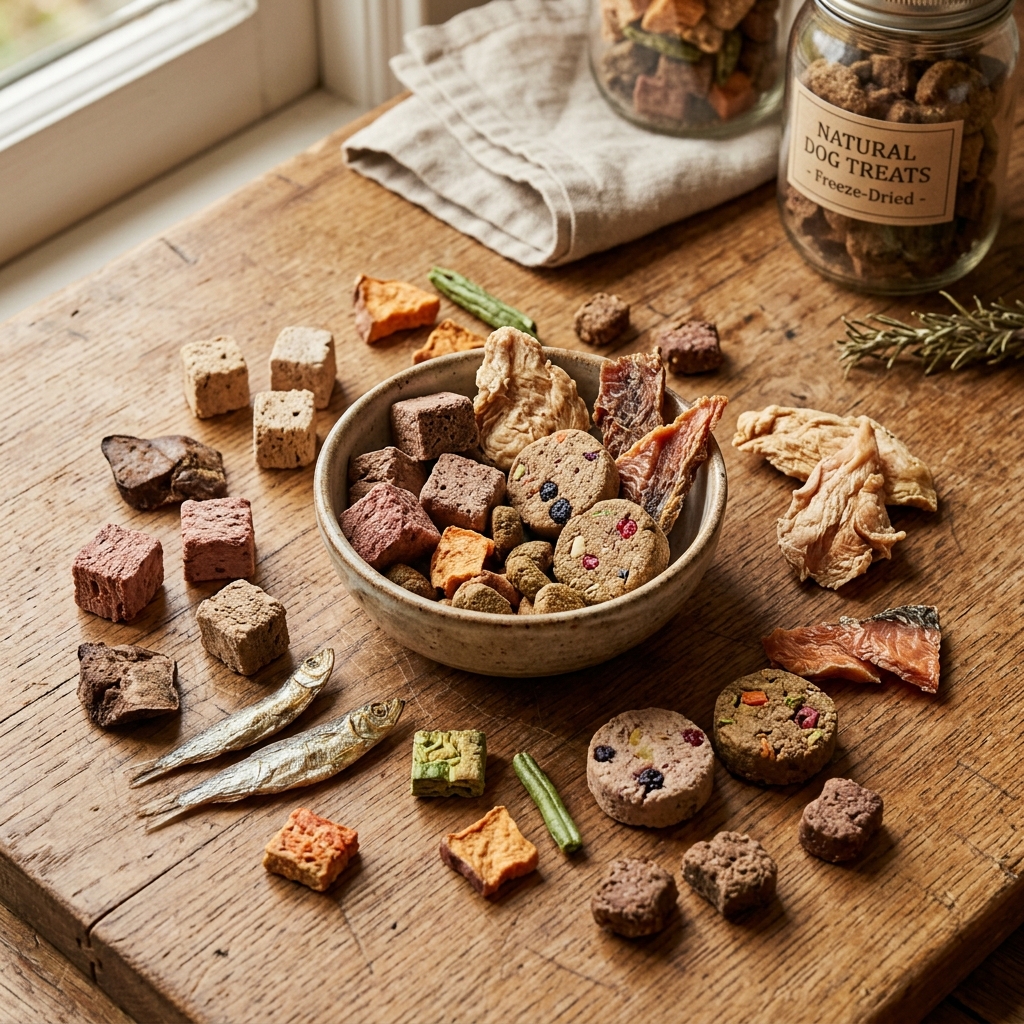
Commercial freeze dried pet food costs $20–$60 per pound. If you own a Harvest Right and a dog or cat, you're sitting on the ability to produce the same premium product at home for a fraction of that cost — with full control over ingredients. If you're a pet parent who cares about what goes into your animal's food, this guide will show you exactly how to do it safely.
We've been freeze drying treats for two dogs (a Lab and a Border Collie) for over a year. Here's everything we've learned — from which proteins work best to what you must never put in the machine for your pets.
Can you freeze dry pet food? Yes — completely safe with the right ingredients.
Best foods for dogs: Chicken, beef liver, sweet potato, carrots, blueberries
Best foods for cats: Chicken, salmon, tuna, turkey, chicken liver
Never freeze dry for pets: Onion, garlic, grapes, raisins, chocolate, xylitol
Shelf life (airtight): 1–3 years for lean meats; 6–12 months for fatty meats
Cost savings: Up to 85% cheaper than commercial freeze dried pet food
Who Should Read This
This guide is perfect for:
- Pet owners who already own a Harvest Right and want to use it for their animals
- Raw diet advocates looking to give their pets raw-equivalent nutrition with shelf stability
- Side-hustle entrepreneurs selling homemade freeze dried pet treats (check local cottage food laws)
- Preppers who want to include their pets in emergency food planning
Dog & Cat Food Comparison Table
| Food | Safe for Dogs? | Safe for Cats? | Shelf Life | Difficulty | Verdict |
|---|---|---|---|---|---|
| Chicken breast (cooked) | ✅ Yes | ✅ Yes | 2–3 years | Easy | ⭐ Best Choice |
| Beef liver | ✅ Yes | ✅ Yes | 1–2 years | Easy | Excellent |
| Salmon (cooked) | ✅ Yes | ✅ Yes | 6–12 months | Medium | Great for cats |
| Sweet potato | ✅ Yes | ⚠️ Limited | 2–3 years | Easy | Dog favorite |
| Carrots | ✅ Yes | ⚠️ Limited | 2–3 years | Easy | Healthy treat |
| Blueberries | ✅ Yes | ⚠️ Limited | 2–3 years | Easy | Dogs love them |
| Turkey (cooked) | ✅ Yes | ✅ Yes | 2 years | Easy | Great option |
| Eggs (scrambled) | ✅ Yes | ✅ Yes | 2–3 years | Easy | High protein |
| Fatty cuts (ribeye, etc.) | ⚠️ Sparingly | ⚠️ Sparingly | 6–12 months | Medium | Shorter shelf life |
| Onion / Garlic | ❌ TOXIC | ❌ TOXIC | N/A | N/A | Never use |
| Grapes / Raisins | ❌ TOXIC | ❌ TOXIC | N/A | N/A | Never use |
| Chocolate / Xylitol | ❌ TOXIC | ❌ TOXIC | N/A | N/A | Never use |
Step-by-Step: How to Freeze Dry Pet Treats
Cook meat thoroughly
Always cook chicken, beef, and fish before freeze drying for pets. Unlike humans who may prefer raw-protein texture, cooked meat is safer, produces better texture in the final product, and reconstitutes more cleanly. No seasoning — ever.
Slice or dice to consistent sizes
Chicken breast: ¼ inch slices or ½ inch cubes. Liver: ¼ inch slices (it dries quickly). Sweet potato: ¼ inch rounds. Consistent thickness = consistent drying.
Line trays and spread in a single layer
Use parchment paper. Do not overlap pieces. For liver and fish, the trays will smell strongly during the cycle — this is normal. Run the machine in a ventilated area.
Run the full cycle (28–36 hours)
Meat takes longer than most foods. Check doneness by breaking a piece in half — it should snap cleanly and show no dark, moist center. If in doubt, run 2–4 extra hours.
Package immediately in airtight containers
For treats you'll use in 2–4 weeks, mason jars work well. For longer storage, vacuum seal in bags. Keep in a cool, dark location. Refrigerating is fine for up to 6 months.
Pros & Cons of Homemade Freeze Dried Pet Food
| ✅ Pros | ❌ Cons |
|---|---|
| Up to 85% cheaper than commercial brands | Requires a $2,000–$5,000 freeze dryer |
| Full ingredient control — no fillers or additives | Strong odors during meat cycles (ventilate!) |
| Long shelf life without refrigeration | Not nutritionally complete — supplement with regular diet |
| Lightweight and perfect for travel/camping | Must be fully cooked to avoid bacterial risk |
| Pets absolutely love the taste | Shorter shelf life for fatty meats (6–12 months) |
What We Tested (and What Our Dogs Thought)
We ran 14 batches of pet-specific food over 6 months. Our two dogs gave enthusiastic reviews to everything except blueberries — the Lab ignored them, the Border Collie ate them happily. The unanimous hits: chicken breast slices, beef liver chips, and sweet potato rounds.
The most practical discovery: freeze dried chicken cubes are the perfect high-value training treat. They're lightweight, don't crumble in a treat bag, have no smell once dried (unlike raw treats), and dogs go absolutely wild for them. A $8 pack of chicken breast makes hundreds of training treats that would cost $35–$45 as a commercial product.
One hard lesson: always clean the machine thoroughly after meat cycles. Residual fat and protein particles can cause off-flavors in your next food batch if you don't wipe down the chamber and trays.
Mistakes to Avoid When Making Pet Food
1. Using any seasoning — Salt, garlic powder, onion powder are toxic to pets even in small amounts. Plain protein only.
2. Freeze drying raw pork — Risk of trichinella. Always cook pork thoroughly before freeze drying.
3. Treating freeze dried food as a complete diet — Homemade freeze dried treats are supplements, not nutritionally complete replacements. Always maintain a balanced baseline diet.
4. Not checking for bones — Inspect all meat for small bone fragments before loading trays.
5. Giving too much liver — Liver is high in Vitamin A. Too much causes Vitamin A toxicity in dogs. Limit to 5% of diet or use as treats only.
Frequently Asked Questions
If you don't yet own a machine, start with our beginner's guide: Complete Beginner's Guide to Home Freeze Drying → | Or see What a Freeze Dryer Actually Costs →
Summary
- ✔ Yes, you can safely freeze dry pet food at home — with the right ingredients
- ✔ Best choices: Cooked chicken, beef liver, turkey, salmon (cats), sweet potato, carrots
- ✔ Never use: Onion, garlic, grapes, chocolate, xylitol, macadamia nuts
- ✔ Always cook meat first for safety and better texture
- ✔ Cost savings: Up to 85% vs. commercial freeze dried brands
- ✔ Use as treats/supplements — not as a complete nutritional replacement
- ✔ Clean your machine thoroughly after every pet-food batch
Related: Best & Worst Foods to Freeze Dry | Freeze Drying for Long-Term Food Storage