If you've seen freeze-dried candy exploding on TikTok and YouTube — those satisfying videos of Skittles puffing up like little planets and gummy bears crunching like glass — and you've wondered "can I actually do that at home?" — the answer is yes. And it's easier than you think.
In this guide, we'll walk through exactly how to freeze dry candy at home, which candies give the best results, which ones are a sticky disaster, how long it takes, and the complete safety checklist for protecting your machine.
Freeze-dried candy searches have exploded since 2022. The global freeze-dried candy market hit $1.5 billion in 2024 and is projected to reach $3.2 billion by 2033. Brands like Skittles (Mars) and Jolly Rancher (Hershey) have now launched their own commercial versions — but home freeze dryers produce results that rival or beat them.
Why Does Freeze Drying Transform Candy?
The science is genuinely fascinating. Most chewy candy — Skittles, gummy bears, Starbursts — gets its texture from moisture and sugar-based gels (gelatin or pectin). When you freeze dry them, the sublimation process removes nearly all that moisture, which does two remarkable things:
- The candy expands dramatically — especially sugar-shelled candies like Skittles. The interior puffs up like a tiny balloon as moisture vapor tries to escape.
- The flavor intensifies — because the sugar and flavor compounds are now super-concentrated without water diluting them. A freeze-dried Skittle tastes much more intensely fruity than a regular one.
The result is a light, crunchy, shelf-stable candy that tastes like a concentrated explosion of the original flavor.
What You Need Before Starting
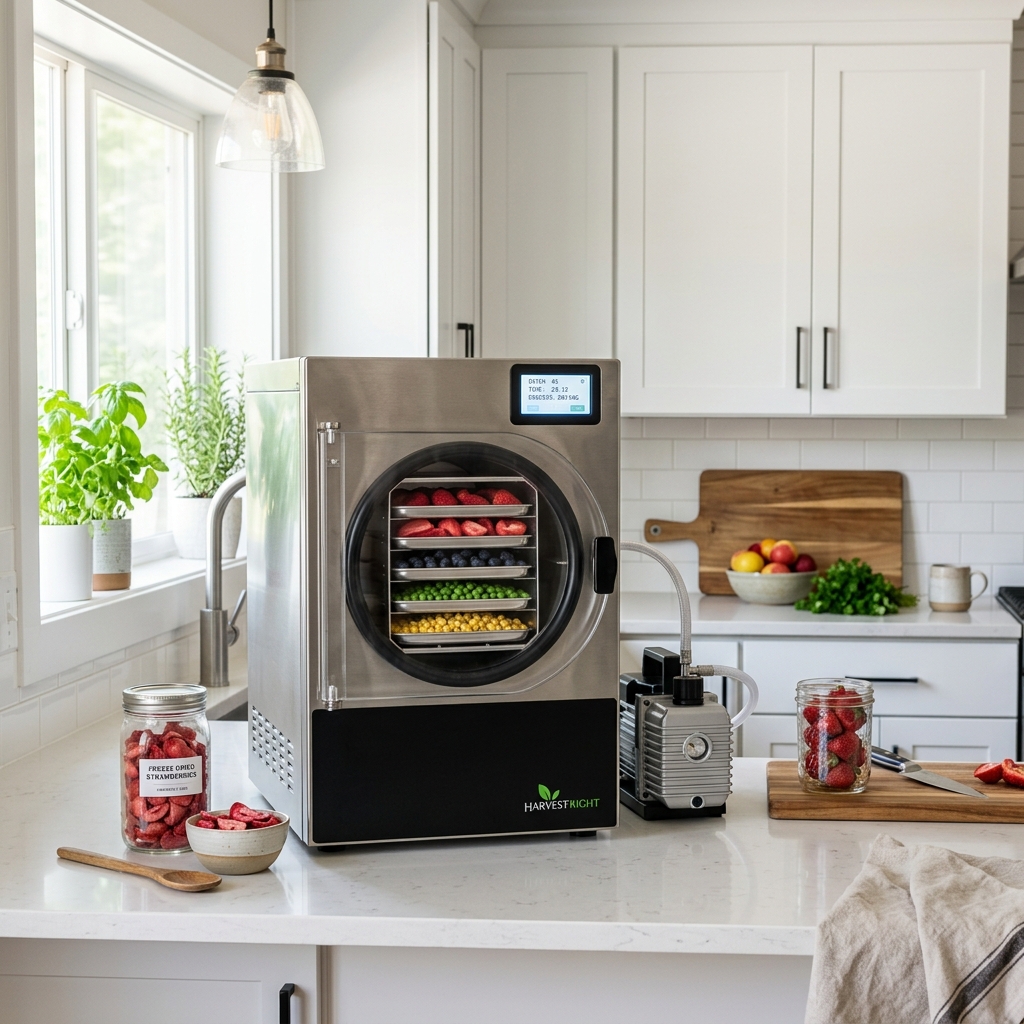
You'll need a home freeze dryer — currently, the Harvest Right is essentially the only consumer-grade option in the USA. Any size works for candy. You'll also want:
- Parchment paper or silicone mats — candy gets sticky during the early freeze phase
- Non-stick spray — lightly coating trays helps with cleanup enormously
- Airtight jars or bags — freeze-dried candy reabsorbs moisture within minutes if left open
- Patience — candy typically needs 20–30 hours, which is average for a full cycle
High-sugar foods like candy are notoriously messy. Always line your trays with parchment paper and never fill trays more than ¾ full. Melted sugar that drips onto your heating elements or chamber floor can cause permanent damage and void your warranty.
Best Candies to Freeze Dry — Ranked
Not all candy responds the same way. Here's our full ranking after testing dozens of varieties:
| Candy | Result | Difficulty | Cycle Time | Verdict |
|---|---|---|---|---|
| Skittles | Puffs up 2–3x size, intense flavor explosion | Easy | 22–26 hrs | ⭐ Best Overall |
| Gummy Bears | Shrink slightly, get extremely crunchy | Easy | 24–28 hrs | Excellent |
| Starbursts | Turns into airy, crunchy squares | Easy | 22–26 hrs | Excellent |
| Peach Rings | Light, crunchy, peachy perfection | Easy | 24–28 hrs | Great |
| Swedish Fish | Crispy exterior, chewy center possible | Medium | 28–32 hrs | Good |
| Nerds Gummy Clusters | Spectacular crunch, complex texture | Medium | 26–30 hrs | Excellent |
| Sour Patch Kids | Ultra-sour crunch — very popular | Easy | 22–26 hrs | Great |
| Jolly Ranchers (hard) | Expands dramatically, glass-like crunch | Hard | 28–36 hrs | Advanced |
| Chocolate (plain) | Minimal change, slight crumble | Easy | 20–24 hrs | OK |
| Caramels | Very sticky, can fuse to trays | Hard | 30–38 hrs | Difficult |
| Taffy | Often doesn't dry fully, remains sticky | Very Hard | 36–44 hrs | Avoid |
Step-by-Step: How to Freeze Dry Candy
Prepare your trays
Line all trays with parchment paper and give them a very light mist of non-stick spray. This is the single most important prep step — without it, sticky candy will fuse to your tray and peeling it off risks scratching the surface.
Spread candy in a single layer
Don't pile or overlap. Skittles and small gummies can be spread freely but should not be touching in big clumps. For flat candies like Starbursts, remove the wrappers and arrange in a single flat layer with slight gaps between pieces.
Pre-freeze (strongly recommended)
Place loaded trays in a regular freezer for at least 6 hours before loading the machine. This cuts 4–6 hours off your total cycle time and reduces the risk of candy melting and sticking during the initial freeze phase in the machine.
Load the freeze dryer & start the cycle
Load trays quickly to minimize warmup. Select "Not Frozen" or "Frozen" based on whether you pre-froze. For candy, use the standard/default cycle settings — no special modifications needed for most gummies and hard candies.
Wait 20–30 hours
The machine handles the rest. Resist the urge to open the door mid-cycle — every opening introduces warm, moist air that can ruin your batch or add hours to the cycle. Let it run to completion.
Check & package immediately
When the machine signals complete, open the door and immediately check a few pieces. They should be completely dry and crunchy — zero soft or chewy spots. If anything is still pliable, run an extra 2–4 hours. Package within 10 minutes of opening — freeze-dried candy reabsorbs ambient moisture incredibly fast, especially on humid days.
Freeze-dried candy goes from perfectly crunchy to sticky in as little as 5–10 minutes on a humid day. If you live anywhere in the South or Midwest USA in summer, work quickly. Keep an open mason jar on your counter to transfer candy into before sealing. Use a dehumidifier in your packaging area if needed.
How to Store Freeze Dried Candy
Storage is just as important as the drying process. Freeze-dried candy without proper packaging has a shelf life of just a few hours before going soft again. With proper storage:
- Mason jar (vacuum sealed): 6–12 months. Perfect for everyday snacking.
- Mylar bag + oxygen absorber: 2–5 years. Best for larger batches or gifting.
- Ziploc bag (airtight): 1–7 days. Short term only — not airtight enough for long storage.
Store all containers in a cool, dark location away from humidity. Do not refrigerate — the condensation when removing from the fridge will ruin your batch.
Can You Sell Freeze Dried Candy?
This is one of the most common questions we get — and the answer varies by state. In most US states, freeze-dried candy falls under cottage food laws since it's a non-potentially-hazardous food (no meat, no dairy). However, the rules differ significantly state by state:
- Some states (Texas, Wyoming) have very permissive cottage food laws with no revenue caps.
- Others (California, New York) have stricter requirements including kitchen inspections.
- Always check your specific state's cottage food law before selling — the NASFT Cottage Food Law directory is a great resource.
Many people have turned home freeze-dried candy businesses into significant side incomes selling on Etsy, at farmers markets, and through local pop-up shops. Profit margins are high — a $2 bag of Skittles becomes a $10–15 retail product.