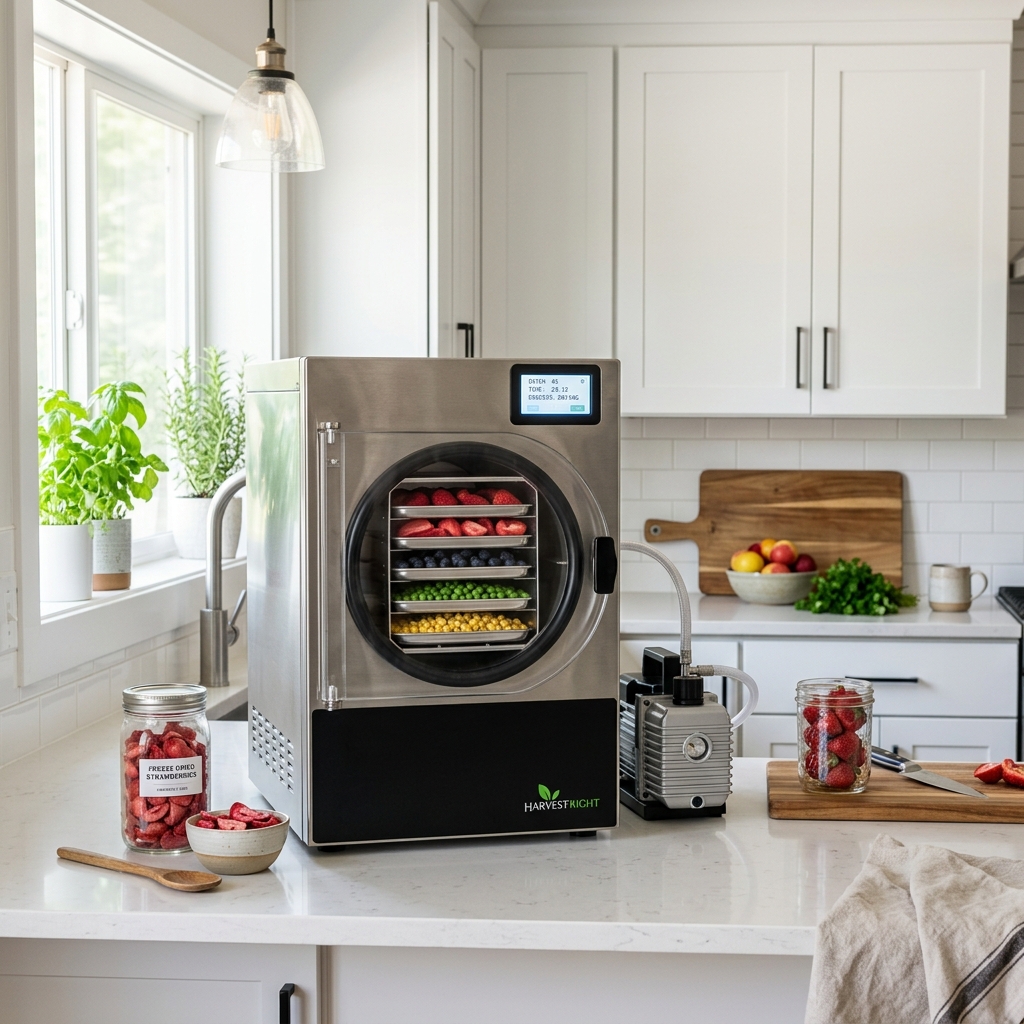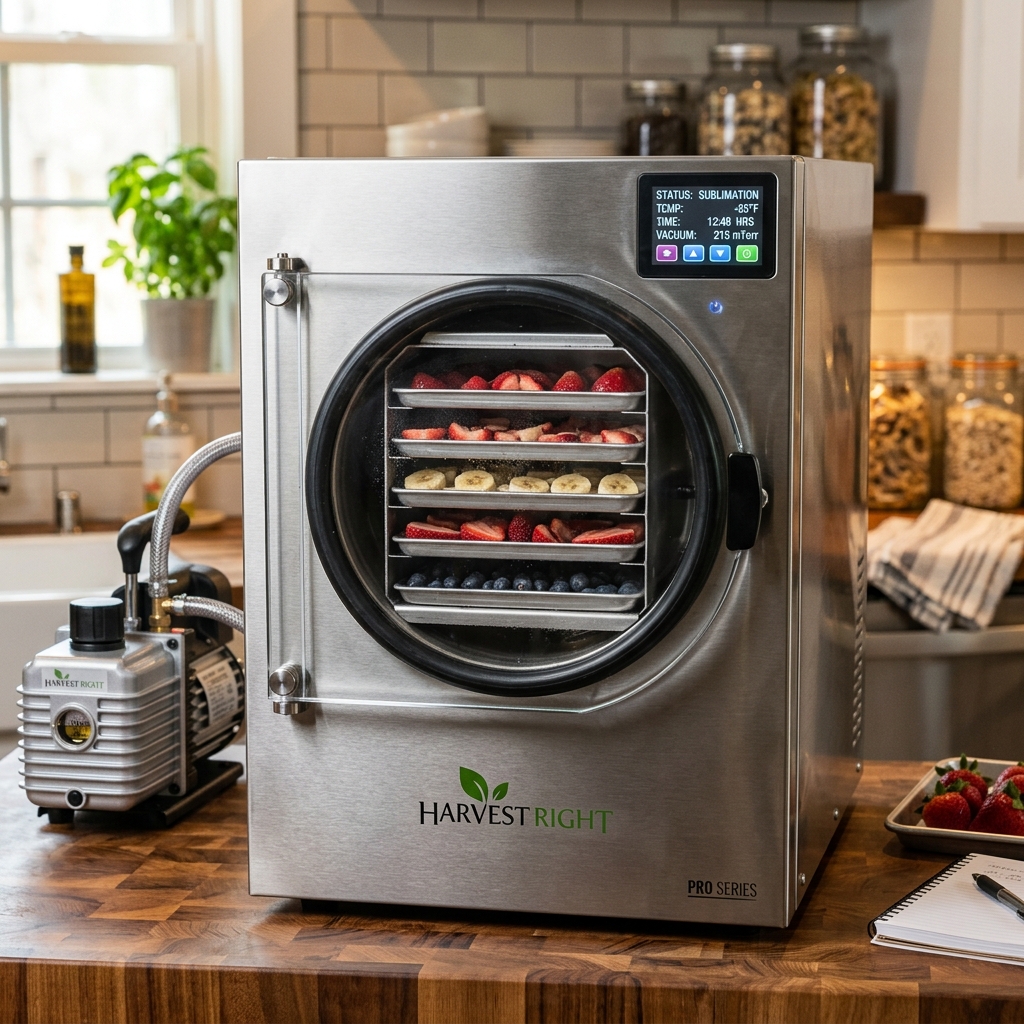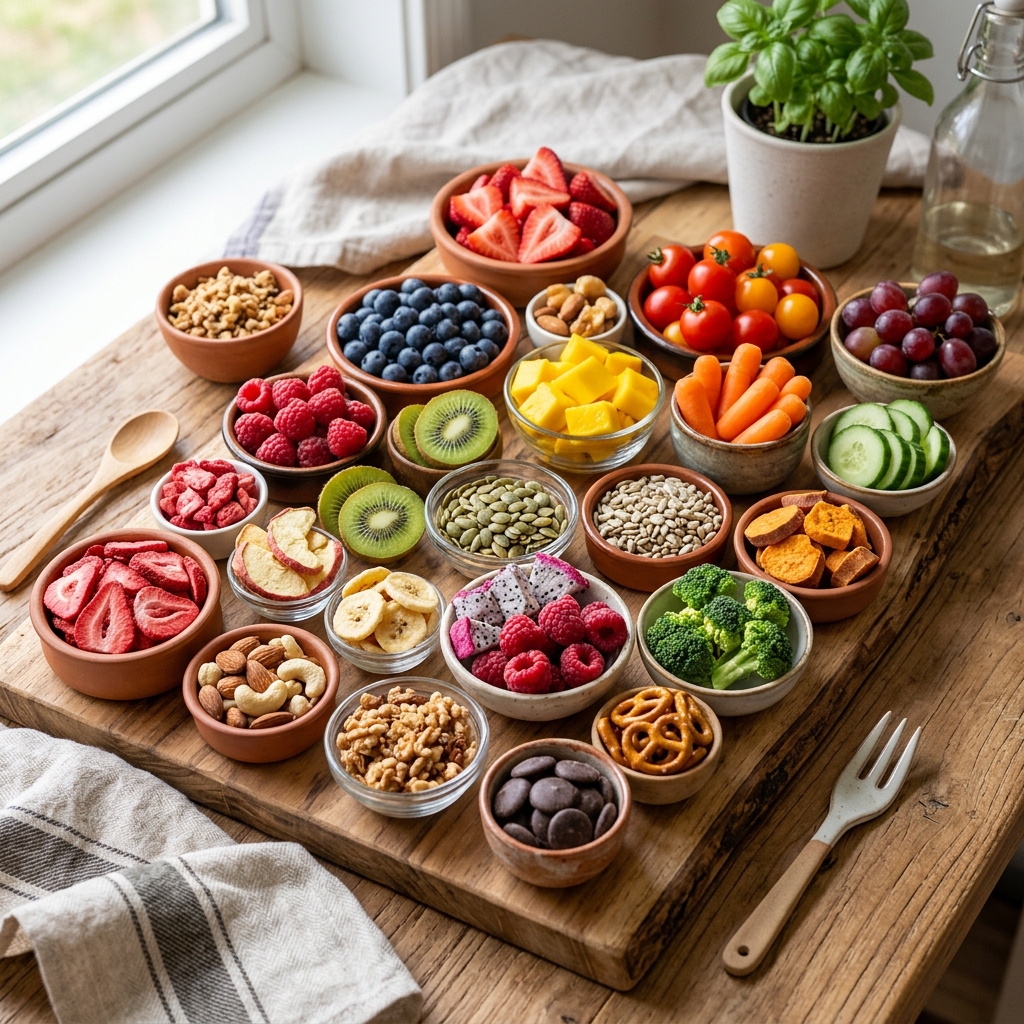
Not all foods are equal when it comes to home freeze drying. Some come out beautifully — vibrant color, intense flavor, and excellent texture after rehydration. Others come out disappointing, greasy, or may not be safe for long-term storage due to fat content.
In this guide, we break down the best and worst foods to put in your home freeze dryer, along with practical tips to get the most out of each batch.
Each food in this list was evaluated based on four criteria: ease of preparation, output quality after freeze drying, rehydration performance, and suitability for long-term storage. We drew on community experience, manufacturer guidelines, and published food science resources to compile these recommendations.
Top 10 Best Foods to Freeze Dry at Home
1. Strawberries
Strawberries are among the most popular foods to freeze dry at home, and for good reason. They come out with an intensely concentrated flavor and a satisfying crunch. They work well as standalone snacks, stirred into granola or yogurt (fresh), or stored for long-term emergency food supplies. A batch of fresh strawberries loses the majority of its weight in water, leaving behind a lightweight, shelf-stable product with excellent flavor.
Prep tip: Slice to about ½ inch thick for even drying. Whole strawberries can be halved if small. Avoid overripe or heavily bruised fruit — quality in means quality out.
2. Sweet Corn
Freeze-dried corn retains its bright sweetness remarkably well and rehydrates nicely in soups, casseroles, and chili. Corn has a high sugar content which freeze drying concentrates, resulting in an intensely sweet snack straight from the bag. Buy fresh corn in bulk during late summer when prices are low, and process it immediately for best results.
3. Scrambled Eggs
Cooked scrambled eggs are one of the most practical foods to freeze dry for long-term storage. Cook them slightly underdone (they finish in storage), allow to cool, and load onto trays. They rehydrate in minutes with hot water and taste remarkably close to freshly cooked eggs. This is especially valuable for emergency food storage, camping meals, and backpacking.
Important: Always cook eggs fully before freeze drying. Raw eggs present food safety risks during the process.
4. Cooked Ground Beef
Fully cooked and well-drained ground beef freeze dries extremely well. It rehydrates in boiling water in just a few minutes and works in tacos, pasta sauce, casseroles, and soups. For backpackers and hikers, freeze-dried ground beef is a game-changer compared to commercial dehydrated protein options. Always drain fat thoroughly before loading — excess fat affects shelf life.
5. Bananas
Freeze-dried banana slices are a crowd-pleaser, especially for children. Overripe bananas work best for maximum natural sweetness. Slice to about ¼–½ inch thick. The resulting chips are light, crunchy, and intensely banana-flavored. They store well in mylar bags and make an excellent snack for school lunches, trail mix, and emergency food kits.
6. Peas
Sweet peas freeze dry beautifully and maintain their bright green color and flavor. They are among the most affordable vegetables to process in bulk and rehydrate perfectly in virtually any dish. Frozen peas from the grocery store work just as well as fresh — no blanching required since they are already briefly cooked.
7. Greek Yogurt
Greek yogurt freeze-dries into light, tangy chips or a fine powder depending on how it is spread on trays. It makes an excellent high-protein snack and retains its probiotic content if stored properly below 70°F. Greek yogurt is one of the harder items to find commercially freeze-dried but easy and cost-effective to make at home.
Prep tip: Spread into a thin, even layer on trays. Add honey, fruit puree, or granola before freeze drying for flavored variations.
8. Shredded Cheddar Cheese
Shredded hard cheeses like cheddar and parmesan freeze dry well and are useful in backpacking meals, homemade mac and cheese mixes, and long-term storage. Hard cheeses with lower moisture content work better than soft or fresh cheeses. Grate or shred finely before loading onto trays to allow good airflow.
9. Leftover Soups and Stews
This is where home freeze drying becomes genuinely impressive. Homemade chili, beef stew, chicken soup, pasta with marinara, or virtually any liquid-based meal can be freeze dried into lightweight, compact bricks that rehydrate fully in 3–5 minutes with hot water. The cost savings compared to commercial backpacking meal pouches are substantial over time.
Prep tip: Make portions roughly the same thickness on the tray (about 1 inch) for even drying. Allow liquid meals to freeze solid in your regular freezer first before loading — this prevents spills and reduces cycle time.
10. Apples and Peaches
Stone fruits and apples come out wonderfully from the freeze dryer. Peach slices develop an intensely concentrated flavor that rivals commercial freeze-dried fruit. Apples work well sliced thin with or without cinnamon. Both are excellent candidates for buying in bulk during peak season at farmers markets or grocery sales.
The best time to freeze dry fruits and vegetables is at the peak of their season when they are freshest and least expensive. Farmers markets, wholesale clubs, and grocery store sales are your best sources for bulk buying. Freeze drying locks in peak quality and flavor at the lowest cost per pound.
7 Foods You Should Never Freeze Dry at Home
Some foods fail not because of taste, but because of food safety or equipment concerns. High-fat foods in particular do not freeze dry well and can go rancid despite proper sealing — sometimes within months. Always prioritize food safety over experimentation.
| Food | Why to Avoid | Alternative |
|---|---|---|
| Butter and Pure Fats | High fat content remains after drying; goes rancid quickly even when sealed | Use very small amounts in complete meals |
| Honey | Highly hygroscopic — immediately reabsorbs moisture from air | Store honey as-is; it naturally has indefinite shelf life |
| Jams and Syrups | High sugar content causes crystallization and stickiness issues | Freeze dry the whole fruit instead |
| Whole Avocados | Extremely high fat content causes rapid rancidity even with oxygen absorbers | Not recommended for freeze drying |
| Nuts and Nut Butters | Already low moisture; high fat content significantly shortens shelf life | Vacuum seal or store in cool conditions |
| Carbonated Beverages | CO2 expansion under vacuum can damage chamber components | Freeze flat in trays after degassing completely |
| Raw Whole Eggs | Food safety risk; potential bacterial contamination during process | Always scramble and fully cook eggs first |
Quick Reference: Drying Times by Food Category
| Food Category | Avg. Drying Time | Difficulty | Expected Shelf Life (Sealed) |
|---|---|---|---|
| Berries (sliced) | 20–28 hrs | Easy | 20–25 years |
| Vegetables | 22–30 hrs | Easy | 20–25 years |
| Cooked Meats | 28–36 hrs | Medium | 10–15 years |
| Dairy (yogurt, cheese) | 24–32 hrs | Medium | 5–10 years |
| Complete Meals / Soups | 30–40 hrs | Advanced | 5–10 years |
These timeframes are general estimates and will vary based on your specific machine model, the ambient temperature in your room, and the water content of the specific food. Always confirm dryness by checking for a completely crispy, non-pliable texture before sealing — this is more reliable than relying solely on the cycle timer.
For more guidance on getting started with your freeze dryer, see our Complete Beginner’s Guide to Home Freeze Drying. To understand the machine investment, read our Harvest Right Freeze Dryer Review.