The two most popular home food preservation methods in the USA have never been more accessible — and more confusing to choose between. A quality food dehydrator costs $50–$400. A home freeze dryer costs $2,800–$6,500. Both remove moisture from food to extend shelf life. So why does the price difference exist, and does it matter?
The short answer: they work very differently, produce very different results, and the right choice depends entirely on what you're trying to accomplish. Let's break it down completely.
Freeze drying wins on: shelf life (25yr vs 1–5yr), nutrition retention (97% vs 50–70%), texture after rehydration, and range of foods. Dehydrating wins on: upfront cost, simplicity, portability, and everyday practicality. They're not really competitors — they serve different goals.
How Each Method Actually Works
Freeze Drying
Freeze drying (lyophilization) is a three-phase process: the food is first frozen solid, then placed in a vacuum chamber where pressure is drastically reduced. Under low pressure, ice crystals skip the liquid phase and sublimate directly into vapor. The result: food that retains its cellular structure, original shape, color, and up to 97% of its nutritional content — with 98–99% of moisture removed.
Dehydrating
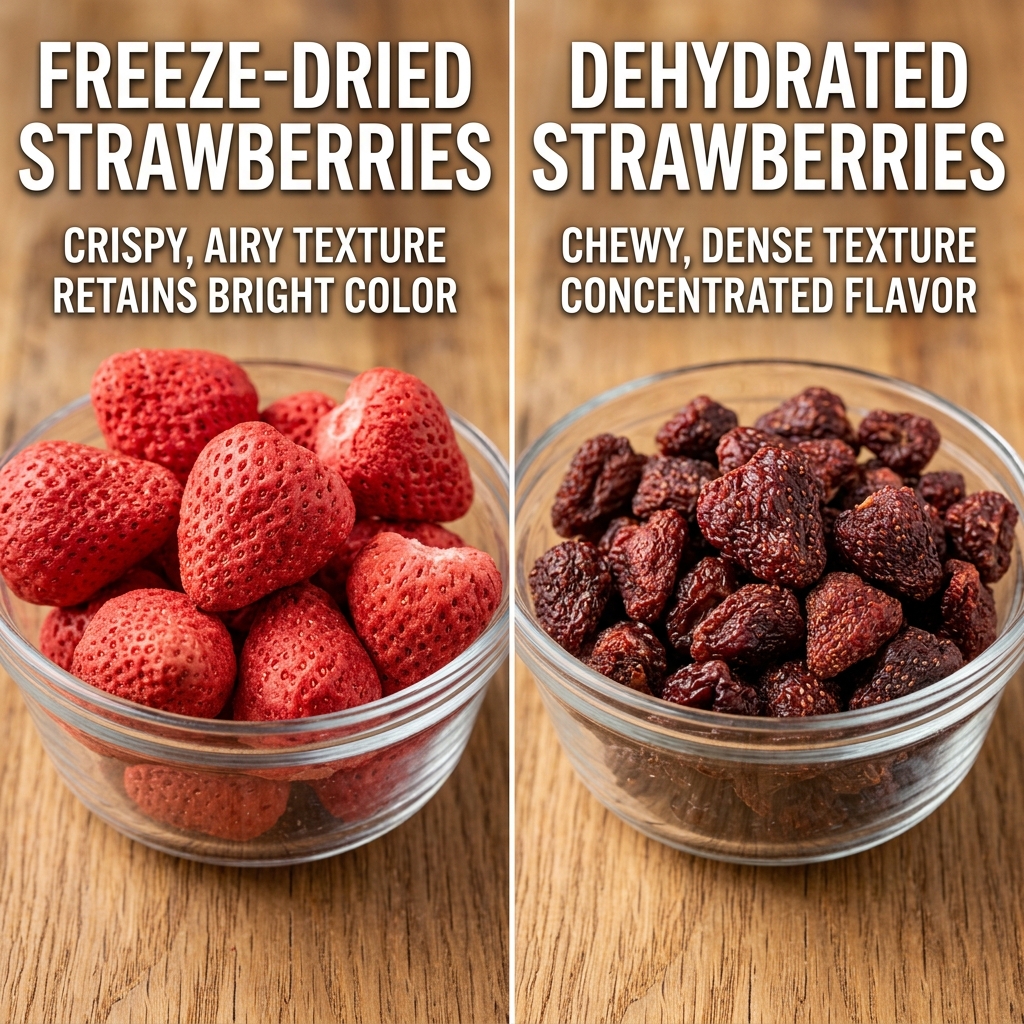
Dehydrating uses low heat (typically 95–160°F) combined with airflow to evaporate moisture from food over many hours. It's a far simpler process — essentially a very precise low-temperature oven with a fan. While effective, the heat involved degrades heat-sensitive vitamins (particularly C and B vitamins) and alters cell structure, which is why dehydrated food often has a leathery, shrunken texture and doesn't fully rehydrate to its original state.
Freeze Dryer
- ✓ 25-year shelf life
- ✓ 97% nutrition retained
- ✓ Near-perfect rehydration
- ✓ Preserves raw texture/color
- ✓ Works on liquids & meals
- ✗ $2,800–$6,500 upfront
- ✗ 24–36 hr cycle times
- ✗ Loud (65–70 dB)
- ✗ Large (fridge-sized)
Food Dehydrator
- ✓ $50–$400 upfront cost
- ✓ 4–12 hr cycle times
- ✓ Compact & portable
- ✓ Very simple to use
- ✓ Great for jerky & herbs
- ✗ 1–5 year shelf life only
- ✗ 50–70% nutrition loss
- ✗ Leathery texture
- ✗ Can't do liquids/meals
Category-by-Category Winner
Shelf Life
Nutrition
Flavor
Upfront Cost
Speed
Simplicity
Jerky/Herbs
Full Meals
Backpacking
Shelf Life: The Biggest Difference
This is where the two methods diverge most dramatically. Properly freeze-dried food stored in mylar bags with oxygen absorbers can last 20–25 years — a claim backed by both Harvest Right and the USDA's own research. Dehydrated food, even when vacuum sealed, typically lasts 1–5 years, with most vegetables degrading in flavor and nutrition within 2 years.
| Food Type | Freeze Dried Shelf Life | Dehydrated Shelf Life | Difference |
|---|---|---|---|
| Fruits & Vegetables | 20–25 years | 1–4 years | 5–15x longer |
| Cooked Meats | 10–15 years | 1–2 years | 8–10x longer |
| Full Meals/Soups | 5–10 years | Not recommended | Only FD works |
| Dairy/Eggs | 5–10 years | 1–3 years | 3–5x longer |
| Jerky | 3–5 years | 1–2 years | Dehydrator simpler |
| Dried Herbs | 5–10 years | 1–3 years | Dehydrator simpler |
Nutrition: How Much Gets Preserved?
This is an area where the science clearly favors freeze drying. The heat involved in dehydration destroys heat-sensitive nutrients — particularly Vitamin C, thiamine (B1), and several antioxidants. Studies have shown dehydrated food retains approximately 50–75% of its original nutrition. Freeze-dried food, by contrast, retains up to 97% of nutrients because no heat is applied during drying.
If you're building emergency food supplies for genuine nutrition during a crisis, freeze-dried food is significantly superior. If you're making trail snacks for weekend hikes where nutrition precision doesn't matter, dehydrated food is perfectly fine and costs far less to produce.
Flavor & Texture After Rehydration
This is perhaps the most noticeable practical difference. Freeze-dried food, when rehydrated with water at the right ratio, returns to almost exactly its original state. Freeze-dried strawberries rehydrate into fresh-tasting strawberries. Freeze-dried chicken soup becomes proper chicken soup within minutes.
Dehydrated food rehydrates into something usable but different — the cellular structure is disrupted by heat, so dehydrated vegetables remain somewhat leathery, and meat becomes tougher. It's entirely acceptable for many applications but noticeably inferior for anything where texture matters (fresh fruit, cooked meals, dairy).
True Cost Comparison Over 5 Years
| Cost Factor | Freeze Dryer (Medium) | Excalibur Dehydrator |
|---|---|---|
| Upfront Equipment | $3,495 | $280 |
| Annual Operating Cost | ~$884 (5x/wk) | ~$120 (5x/wk) |
| 5-Year Total Investment | ~$7,915 | ~$880 |
| Value of Food Produced (5yr) | ~$28,000+ | ~$4,500 |
| Shelf Life of Stored Food | 25 years | 1–4 years |
The math makes freeze drying compelling for heavy users, but the barrier of the $3,500 upfront cost is real. A dehydrator is the obvious choice for beginners, budget-conscious preppers, or anyone primarily making jerky, herbs, and trail snacks.
The Verdict: Which Should YOU Buy?
Buy a Freeze Dryer if:
- You're building a 6+ month emergency food supply for your family
- You want to preserve full cooked meals, soups, or dairy
- You're a serious hiker who wants lightweight, high-nutrition trail meals
- You have food waste from bulk buying or gardening
- You want to start a side business selling freeze-dried food
Buy a Dehydrator if:
- You primarily want to make jerky, dried herbs, or trail mix
- Your budget is under $500
- You're just starting out with food preservation and want to experiment
- You have limited space (dehydrators are much more compact)
- Speed matters — dehydration cycles take 4–12 hours vs. 24–36 hours
If budget allows, the ideal setup is both. Use a quality dehydrator ($200–$350) for everyday jerky, herbs, and quick snacks. Use your freeze dryer for serious long-term food storage, complete meals, and high-value produce. They complement each other beautifully.