Home freeze drying has grown from a niche food preservation hobby into a practical skill for thousands of American families. With a home freeze dryer, you can store food for extended periods, preserve nutrients, and reduce food waste — all from your own kitchen or utility room.
In this guide, we cover everything you need to know before buying your first machine: how the process works, which machine to choose, how to set up your space, and how to run your very first successful batch.
Freeze drying removes moisture from food using a process called sublimation — ice crystals turn directly into vapor without passing through a liquid phase. This is why freeze-dried food retains its shape, color, taste, and much of its nutritional content better than dehydration.
What Is Freeze Drying, Exactly?
Freeze drying — technically called lyophilization — is a three-phase process:
- Freezing: Food is frozen solid, typically to around -30°F to -50°F.
- Primary Drying (Sublimation): A vacuum pump reduces chamber pressure, causing ice to sublimate directly into vapor, which is captured by a cold trap.
- Secondary Drying (Desorption): Slightly elevated temperatures remove any remaining bound moisture molecules.
The entire process takes 24–36 hours depending on the food’s water content, batch size, and your specific machine model.
The key advantage over regular food dehydration is that freeze drying operates at much lower temperatures, which better preserves flavor, texture, and nutritional value. Dehydrated food often shrinks, changes color, and loses texture; properly freeze-dried food tends to hold its shape and rehydrate much more closely to its fresh state.
Which Home Freeze Dryer Should You Buy?
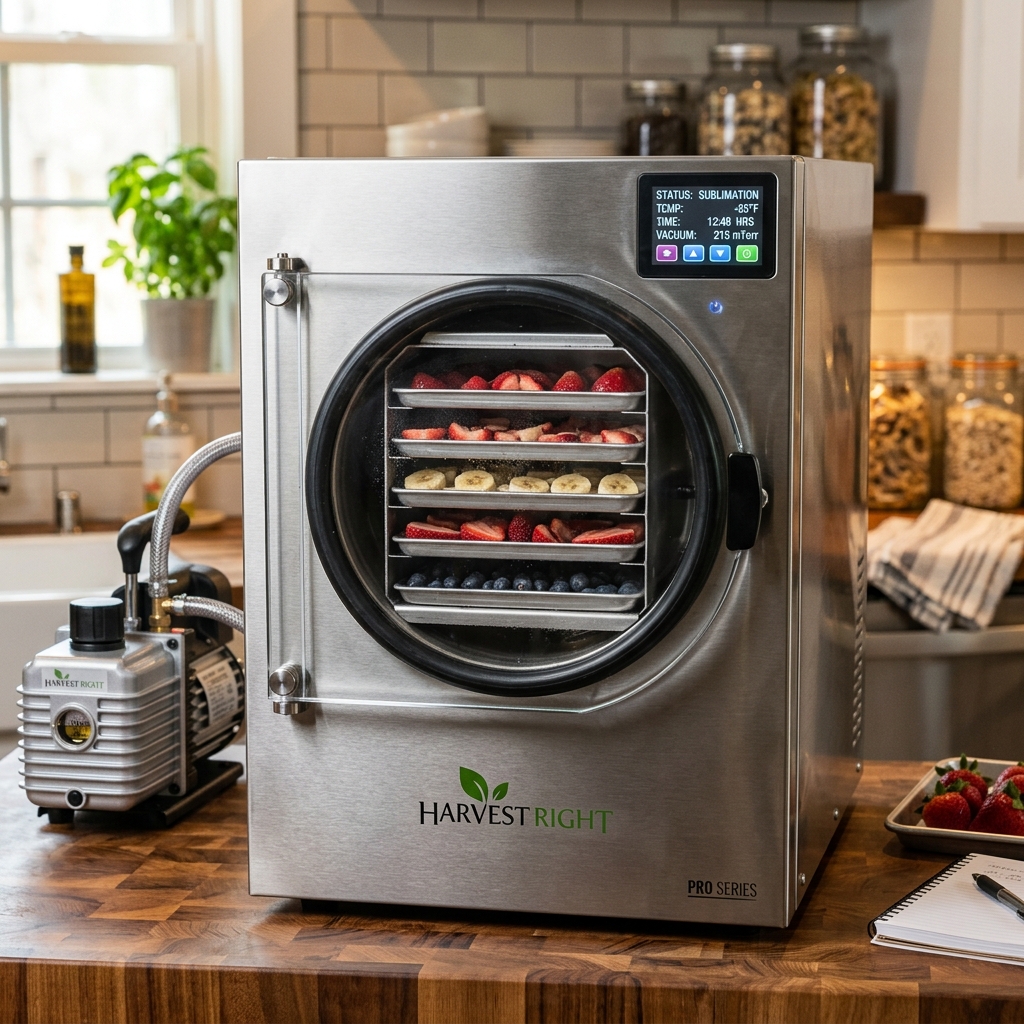
As of 2025, Harvest Right is the primary manufacturer of consumer-grade home freeze dryers available in the United States. They offer several sizes designed for different household needs:
| Model | Tray Capacity | Approx. lbs Per Batch | Price (MSRP) | Best For |
|---|---|---|---|---|
| Small | 4 trays | 4–7 lbs | ~$2,795 | Singles, couples |
| Medium | 5 trays | 7–10 lbs | ~$3,495 | Small families |
| Large | 6 trays | 10–16 lbs | ~$4,495 | Larger families, bulk |
| Extra Large | 9 trays | 18–27 lbs | ~$6,495 | Homesteads, heavy users |
Harvest Right regularly offers promotions. Always check their official website before purchasing — seasonal sales can reduce prices meaningfully. Prices shown here are approximate MSRPs and may have changed since publication.
For most American households starting out, the Medium model offers the best balance of capacity and cost. If you have a larger family or plan to freeze dry in bulk, the Large may be worth the additional investment upfront.
Setting Up Your Freeze Dryer at Home
Before your machine arrives, here’s what to prepare:
- Dedicated Electrical Circuit: The medium and large models run on standard 110V power but draw significant amperage. A dedicated 20-amp circuit is recommended to avoid tripping your breakers during long overnight cycles.
- Cool, Stable Room Temperature: Freeze dryers work best in ambient temperatures between 45°F and 75°F. Avoid placing them in an uninsulated garage in summer or an extremely cold basement in winter, as temperature extremes affect performance.
- Mylar Bags and Oxygen Absorbers: For long-term storage (10–25 years), use proper food-grade mylar bags paired with 300–500cc oxygen absorbers. These are widely available on Amazon and at most preparedness retailers in the USA.
- A Kitchen Scale: Weighing food before and after the cycle helps you track moisture removal and confirm dryness.
- Vacuum Sealer and Mason Jars: For shorter-term storage (1–5 years), vacuum-sealed wide-mouth mason jars work well and are very affordable.
- Pump Oil (for standard models): The standard vacuum pump requires oil changes every 20–25 batches using food-grade pump oil. Budget for this ongoing maintenance cost.
Running Your First Batch — Step by Step
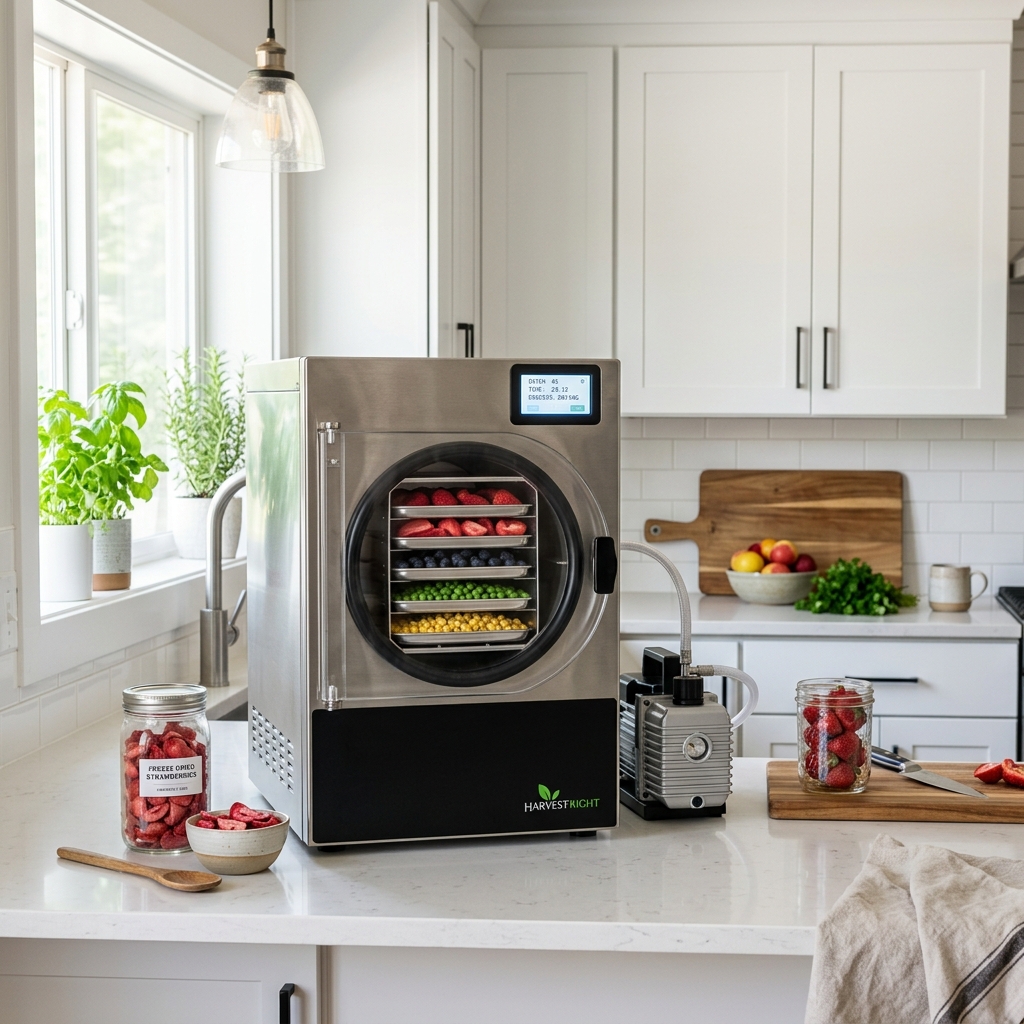
Strawberries are one of the most popular starting foods for new freeze dryer owners. Here is how to run your first batch:
- Prep your food: Wash, hull, and slice strawberries to about ½ inch thick. Uniform thickness ensures even drying across all pieces.
- Pre-freeze (optional but recommended): Place sliced strawberries on trays in a regular household freezer for 4–6 hours before loading into the freeze dryer. This shortens your total cycle time.
- Load the machine: Arrange strawberries in a single layer on trays. Do not overpack or stack pieces — air needs to circulate around each piece.
- Run the cycle: Start the machine and let it run its automatic cycle. For strawberries, expect 24–30 hours total. Modern Harvest Right machines automatically extend the cycle if they detect remaining moisture.
- Check for dryness: When the cycle ends, immediately check that pieces are fully crispy and crunchy with no soft or pliable centers. Any softness indicates residual moisture, which can cause spoilage in sealed packaging.
- Package immediately: Transfer directly into mylar bags with oxygen absorbers and heat-seal within 10–15 minutes to prevent moisture reabsorption from the ambient air.
How to Store Freeze-Dried Food Properly
Proper storage is just as important as the freeze-drying process itself. Here are the key principles for USA home freeze dryers:
- Mylar bags with oxygen absorbers are the gold standard for long-term storage (10–25 years). Use 1-gallon or 5-gallon food-grade mylar bags with a 300cc–2000cc oxygen absorber depending on the bag size.
- Store in a cool, dark location. A basement, pantry, or interior closet maintained at 60–70°F is ideal. Heat degrades stored food faster than almost any other factor.
- Label everything. Always label your sealed bags with the food type, date packed, and estimated use-by date. Freeze-dried food looks similar regardless of content once sealed.
- Avoid humidity. Freeze-dried food is extremely hygroscopic — it will absorb moisture from the air rapidly when exposed. Always work quickly when opening and resealing containers.
Is a Home Freeze Dryer Worth the Investment?
This is the most common question we receive, and the honest answer is: it depends on your household situation and goals.
If you regularly purchase commercial freeze-dried food for camping, emergency preparedness, or daily snacking, you can recoup the machine’s cost over time. A single commercial #10 can of freeze-dried strawberries typically costs $45–$55. Producing an equivalent batch at home costs a fraction of that in electricity and supplies, plus the fresh produce.
For families who cook at home frequently and generate food waste, the economics become more compelling — you can freeze dry leftover meals, excess produce from the garden, and bulk grocery purchases that would otherwise spoil before you finish them.
That said, the upfront cost is significant. For individuals or couples with limited storage space, it may be worth exploring shared ownership with a neighbor or family member before committing.
For families of three or more who are serious about food storage or regularly buy freeze-dried food commercially, a home freeze dryer is a worthwhile long-term investment. For smaller households, weigh your actual usage patterns honestly before purchasing.